

Development Sweden #84. Sida drops ‘Islamist clause’ in new agreements
A newsletter on Swedish development cooperation and policy

Dear readers,
Welcome back to a new issue of Development Sweden. Since the Swedish government decided to dismiss Sida’s Director General, the political process has taken centre stage at the Committee on the Constitution in the Swedish Parliament. Meanwhile, Sida has decided to drop the ‘Islamist clause’ in new civil society contracts. Also in this issue, Maria Leissner, former ambassador, and leader of the Liberal Party, writes about what she calls “Sweden’s betrayal of IDEA”.
Development Sweden provides you with exclusive insight into everything happening in Swedish aid policy every other week. Development Sweden relies on readers like you. If you would like to read the full newsletter, you are most welcome to upgrade to a paid subscription.
David Isaksson
Editor-in-Chief, Global Bar Magazine
What do you think we should write more about? Please send us your feedback and suggestions. Write to: david@globalreporting.net
For subscription-related issues, contact: lisa@globalreporting.net
Our Headlines
Column: Sweden’s betrayal of IDEA.
Sida drops ‘Islamist clause’ in new agreements.
Civil society: Changed Sida rules lead to waste of resources and money.
Committee on the Constitution pressed Granit on Gaza and Somalia.
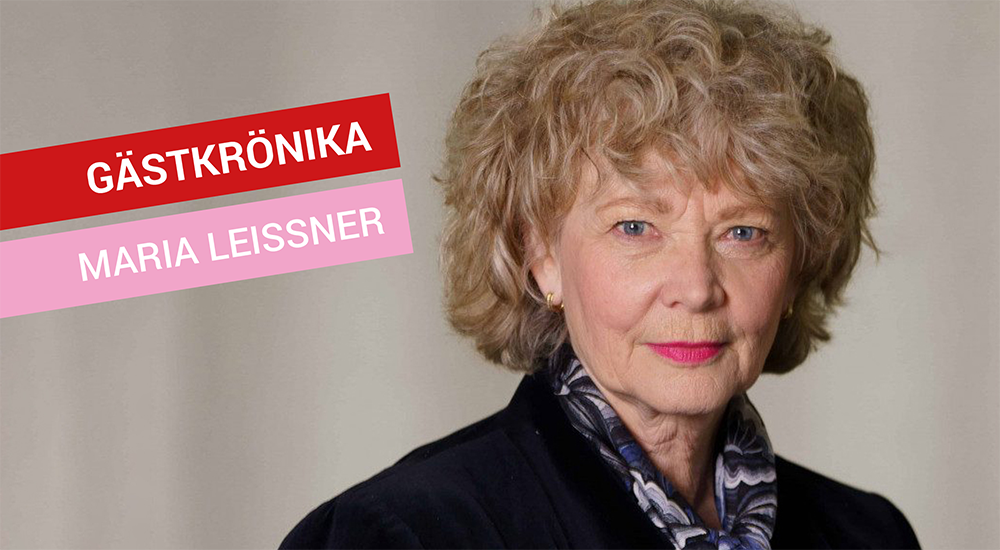
Column: Sweden’s betrayal of IDEA
As the initiator, Sweden has provided a large part of the financial foundation for the democracy institute IDEA. The draconian cuts to Sweden’s support during the Tidö parties’ time in power can therefore be seen as nothing other than an attempt to pull the rug out from under IDEA. So writes Maria Leissner, former leader of the Liberal Party and the author of the original parliamentary motion leading to the formation of IDEA.
This is an opinion article. The views expressed are those of the author.
In October 1990, right at the start of the great global explosion of democracy that followed the fall of communism in 1989, I was asked to take part in an election monitoring delegation to Pakistan organised by the National Democratic Institute (NDI) in the US.
At that time, the democratic world had barely begun to monitor all these new multi-party elections. A few organisations in the US had started to develop formats and techniques for election monitoring. Some European institutions, such as the European Parliament, routinely sent a handful of observers.
Democracy support work was in its infancy, but the democratic popcorn pan was rattling faster and faster.
The NDI’s delegation to Pakistan was serious. Delegations were sent before, during and after the elections. A methodology had been developed for parallel vote tabulation and for the close observation of the campaign, the election, and the vote count. The whole operation was carried out by a large delegation covering the entire country. A comprehensive public report was published afterwards, having been thoroughly discussed and refined based on input from the entire delegation.
My team had been on the ground in Karachi for a week, interviewing all relevant stakeholders, when two observers from the EU arrived the day before the election. The two gentlemen began by having tea with the Governor of Karachi. On election day, they made their way to a total of two polling stations. Then these two gentlemen held a press conference where they spoke authoritatively about what they had observed.
After that, they went home. Before the votes had been fully counted.
We in the NDI delegation were aghast at their lack of professionalism. On the plane home, I thought to myself that this simply would not do. When the whole world was crying out for guidance on how to actually build a democracy, was it to be only the US that had the capacity to answer the question? Was American foreign policy ultimately to have a say in the shaping of democratic systems in the rest of the world, whilst the democratic traditions of Europe and others could not serve as a model?
Following wise input from MP Thomas Hammarberg, whom I often sought advice from on matters of human rights and democracy, I tabled a motion in the Riksdag for an international election monitoring institute, to be based in Sweden.
The motion was well received, i.e., it was deemed to have been answered by being referred to the Ministry for Foreign Affairs for investigation. After a year or so, the former State Secretary for Development Cooperation, Bengt Säwe-Söderberg, was appointed as investigator. Bengt put together what would become International IDEA and negotiated for the City of Stockholm to provide Strömsborg free of charge as the headquarters for the new organisation.
A global knowledge centre
In the spring of 2025, IDEA celebrated its 30th anniversary. Over these three decades, IDEA has developed into a hub for global democracy support and a centre of expertise for the craft of democracy.
This knowledge is available to all countries and is shared without lecturing or exerting foreign policy pressure. “Democracy can never be exported but must be supported” was an early guiding principle for IDEA.
The number of member countries has grown steadily and now comprises 35 democracies across the globe. IDEA has therefore come to serve as one of the more prominent platforms for practical cooperation between the world’s democracies.
Kevin Casas-Zamora, former Vice-President of Costa Rica, is a highly regarded Secretary-General and was re-elected two years ago. He has every reason to be proud of IDEA’s development over the past seven years.
In the midst of this success story about the only intergovernmental institution hosted by Sweden, comes a crushing blow.
The Swedish government has shockingly slashed the Swedish contribution to IDEA’s operations by 80 per cent over three years: in 2022, Sweden provided €6.5 million in core funding to IDEA. The Tidö government got off to a flying start by halving the core funding over three years to €3.2 million. The sum that had been promised as a floor was suddenly halved again just before Christmas 2025 (despite the fact that Sweden had approved IDEA’s budget, calculated on the basis of the previous sum, a couple of weeks earlier). Core funding now amounts to €1.48 million.
In addition, nine-tenths of the project funding from Sida for IDEA’s democracy support projects is being withdrawn.
In total, Sweden’s contribution now accounts for a mere eight per cent of member states’ support for IDEA’s activities.
Sweden had previously, as is customary for a host country and founding country, for decades provided a reliable part of IDEA’s financial foundation. The drastic cut in Sweden’s support for IDEA now sends a signal of a lack of confidence that risks having a knock-on effect.
This is a dramatic development. It is not linked to any change in Sweden’s assessment of IDEA’s activities; quite the contrary. In recent years, the Ministry for Foreign Affairs has expressed great satisfaction with the development of its activities.
This draconian and unjustified cut can only be seen as an attempt to pull the rug out from under IDEA. The Sweden Democrats’ stance on global democracy support is not exactly characterised by great enthusiasm. Nor does the rest of the government seem concerned about losing the host country status for IDEA, this crown jewel of Swedish aid policy.
IDEA will survive. It is firmly established in a number of member states and enjoys a solid reputation throughout the world.
Will IDEA be forced to leave Sweden?
But the government’s drastic cuts could lead to this global democracy institute being forced to leave Sweden, its birthplace, its host country, its enabler.
It is even stranger that this is happening under a government comprising three parties, two of which were involved in the creation of IDEA – and all three of which, together with the Centre Party (c) in government and under the leadership of Minister for International Development Cooperation Gunilla Carlsson (m), pushed through a reorientation of Sweden’s aid to focus strongly on freedom and democracy as development goals.
Many people, across all party lines, have been involved in the creation and development of IDEA. But it feels as though your heart is being torn from your body when you see a significant part of your life’s work being torn down and perhaps driven into exile.
Maria Leissner
Former ambassador and leader of the Liberal Party, among other roles
