

Development Sweden #71. Here is how corruption in Ukraine can be reduced
A newsletter on Swedish development co-operation and policy

Dear readers,
Welcome to a new issue of Development Sweden. After a nice summer break, we are back again, updating you with recent news on Development Cooperation from a Swedish perspective. Despite criticism the royal foundation Global Child Forum will continue working with Boston Consulting Group. Also in this issue, Parul Sharma from , the Anti-Corruption Institute (IMM) gives her advice to Ukraine as on how to combat corruption.
Development Sweden is providing you with exclusive insight about everything that happens in Swedish aid politics. Development Sweden depends on readers like you. If you would like to read the full newsletter you are most welcome to upgrade to a paid subscription.
David Isaksson
Editor-in-Chief, Global Bar Magazine
Monika Gutestam Hustus
Editor, Development Sweden
What do you think we should write more about? Please give us feedback and suggestions. Write to: david@globalreporting.net
For subscription related issues, contact: lisa@globalreporting.net
Our headlines
Opinion: Here is how corruption in Ukraine can be reduced
This is how Sida will decide what is “Islamism”
Global Child Forum maintain collaboration with Boston Consulting Group
Business at the centre of Sweden’s new Sustainable Growth Strategy
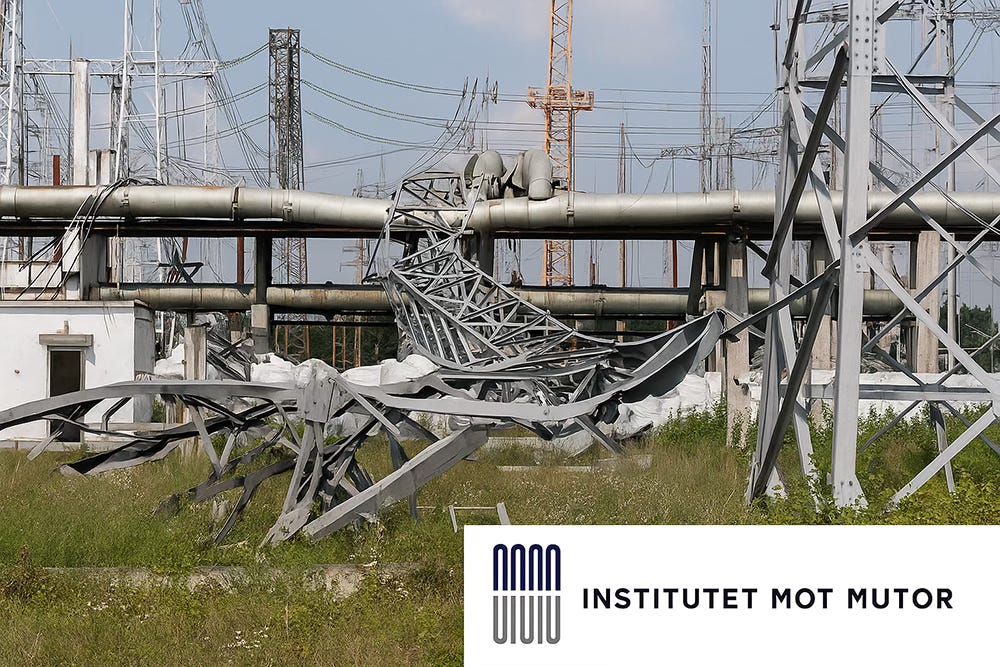
Opinion: Here is how corruption in Ukraine can be reduced
Ukraine is Sweden's largest aid recipient. Ukraine also faces major corruption challenges. For Sweden, as for other aid donors, it is important to combine solidarity with a high degree of accountability. This is according to Parul Sharma, Secretary General of The Swedish Anti-Corruption Institute (IMM).
This is an opinion article. The views expressed are those of the author.
Sweden's humanitarian and military support to Ukraine following the full-scale Russian invasion in 2022 has been both swift and extensive. By mid-2024, Sweden will have contributed approximately SEK 37 billion in support to Ukraine, the majority of which consists of military aid in the form of equipment, training and services provided by the Swedish Armed Forces. Additional funds have been allocated to humanitarian aid, civilian support, and reconstruction.
But how can we ensure that these resources are not misused? This is an important question, especially given Ukraine's history of serious corruption.
Since independence in 1991, corruption has been a structural obstacle to Ukraine's democratic and economic development. In 2023, the country ranks 104th out of 180 in TI's Corruption Perceptions Index, an improvement from previous years, but still low.
Oligarchs are a small group of influential businessmen who have had disproportionate influence over politics, the legal system, and the media in the country. Although several of them have lost power in recent years, the oligarchic structure has not been completely dismantled. For example, the Ukrainian government has recently stripped certain oligarchs of their citizenship and seized their assets.
Corruption also occurs at other levels of society, such as in public procurement, the judiciary and healthcare. According to a 2023 study by the Kyiv International Institute of Sociology, lack of trust in the judiciary and suspected favouritism in public appointments remain widespread problems.
At the same time, Ukraine has introduced several reforms in recent years with support from the EU and the IMF: NABU (National Anti-Corruption Bureau) has launched several major investigations. The High Anti-Corruption Court (HACC) adjudicates corruption cases and has convicted several high-ranking officials since 2020. A new system for e-declaration of assets for public officials has been introduced, although its implementation has suffered setbacks. This has been welcomed by the Swedish Anti-Corruption Institute.
During the war, Zelensky's government has dismissed several high-ranking defence and local officials on suspicion of bribery. Among other things, this involved corruption in the procurement of military supplies and construction materials.
New anti-corruption law in Ukraine - what does it mean?
On 22 July 2025, Ukraine's parliament (Verkhovna Rada) passed bill no. 12414, which, among other things, places two of the country's most important anti-corruption bodies - NABU (National Anti-Corruption Bureau of Ukraine) and SAPO (Specialised Anti-Corruption Prosecutors) - under the control of the Prosecutor General, an official appointed by the President. The law was introduced on the grounds that the authorities need to be protected from Russian influence and that investigations should be more effective and less protracted. The reform law of July 2025 marks a clear shift in power, with anti-corruption institutions now subordinate to the Prosecutor General and thus to the President's control. This has triggered widespread protests from civil society and the EU, which see the law as a step backwards in Ukraine's anti-corruption journey and making it more difficult for the country to move closer to EU membership.
Following the harsh criticism, a new bill is now expected with the intention of restoring the independence of the authorities. This development will be an important signal regarding Ukraine's continued path towards the EU and democratic norms.
How is the risk associated with Swedish aid being managed?
Swedish and European aid to Ukraine is currently often conditional and carefully tracked. Military support from Sweden is provided through bilateral agreements and via the EU's coordination structure. Humanitarian aid goes through established organisations such as the UNHCR, the Red Cross and the World Food Programme.
Both the Swedish National Audit Office and Sida have pointed out the importance of risk analysis and follow-up, especially during wartime. That's why requirements for transparency, control systems and independent audits are included in aid agreements.
Ukraine still faces enormous corruption challenges, but also historic opportunities for change. For Sweden, as for other aid donors, it is important to combine solidarity with a high degree of accountability, and support with demands for transparency and reforms.
Recommendations from IMM:
1. Strengthen the independence of anti-corruption bodies
Legislate for full functional and administrative independence for NABU, SAPO and HACC.
Establish an independent supervisory board consisting of international experts and civil society representatives.
Prohibit political interference in the recruitment processes for senior officials in these bodies.
2. Introduce public transparency in defence procurement
Create a secure but transparent system for publishing defence procurement contracts retroactively (after delivery) for review by the media and parliament.
Use blockchain technology to track transactions of state aid and materials.
3. Reintroduce mandatory e-declaration of assets
Reactivate and modernise the previous system whereby public officials must declare all income, assets and gifts and make this fully available to the public online.
4. establish fast-track courts for corruption offences during wartime
Create temporary, specialised courts with fast-track procedures to handle corruption cases linked to military equipment, reconstruction, and aid.
5. introduce a national whistle-blower law
Protect and reward whistle-blowers who expose corruption, including within the military and regional authorities.
Guarantee anonymity and legal protection.
6. digitise public services and licensing processes
Expand the existing Diia system to cover more licences, permits and services - to reduce opportunities for bribery.
Use AI-based monitoring to detect suspicious patterns in contract awarding.
7 Introduce an 'EU track' for anti-corruption assessment
Establish a joint EU-Ukraine commission for regular review of anti-corruption efforts.
Link future EU support directly to progress in reform implementation and anti-corruption results.
8. Train future civil servants in anti-corruption and the principles of the rule of law
Introduce a mandatory training programme on integrity, public ethics, and anti-corruption for all new civil servants.
Cooperate with European institutes and universities for exchange and knowledge transfer.
Parul Sharma
Secretary General, Institute Against Corruption (IMM)